Consultant Vascular Surgeon · FRCS (Vasc), MD
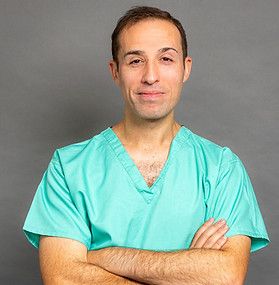
Mr David Adam Sidloff
Consultant vascular and endovascular surgeon based at Queen's Medical Centre, Nottingham. He combines specialist clinical practice with academic research, and offers patient-focused assessment and treatment for varicose veins.
A duplex ultrasound scan helps confirm which veins are affected and guides a personalised plan — so treatment is targeted, safe, and appropriate.
Expertise built around what patients value most
When you're choosing a surgeon for varicose vein investigation and treatment, you want three things: excellent clinical judgement, a strong safety culture, and a clinician who listens. This page summarises Mr Sidloff's approach.
Clinical excellence
- Consultant vascular and endovascular surgeon at Queen's Medical Centre, Nottingham.
- Completed specialist training in Vascular & Endovascular Surgery (CCT 2022) and holds FRCS (Vasc).
- Experienced in assessing the full range of venous disease — from early symptoms to more complex varicose vein patterns.
- Uses duplex ultrasound findings to plan targeted treatment (rather than a one-size-fits-all approach).
Patient safety
- Care is consultant-led, with clear explanations of benefits, risks, and alternatives.
- Treatment planning is guided by duplex ultrasound mapping to improve accuracy and avoid unnecessary procedures.
- Works within established hospital governance and safety standards.
- If urgent symptoms arise, patients are advised to seek urgent NHS assessment; the clinic supports appropriate follow-up during office hours.
Compassion
- Takes time to understand what matters to you: discomfort, swelling, skin changes, or appearance.
- Explains results in plain English and helps you make a confident decision about next steps.
- Focuses on practical recovery advice so you know what to expect after treatment.
- Aims for a calm, respectful experience — especially for patients who feel anxious about procedures.
A quick note on varicose veins
Varicose veins are often more than a cosmetic issue. Symptoms can include aching, heaviness, swelling, itching, night cramps, and skin changes. A proper assessment (including duplex ultrasound) helps confirm the cause and guides the safest, most effective treatment.
Focused on varicose vein investigation and treatment
Many people live with symptoms for years — or worry that treatment will be a major operation. Modern varicose vein care is often minimally invasive and designed to get you back to normal activity quickly.
- • A clear explanation of your symptoms and likely causes
- • Duplex ultrasound findings explained in plain English
- • A personalised plan (including whether treatment is needed)
- • Recovery guidance and what to expect afterwards
A minimally invasive treatment that uses controlled heat to seal the main refluxing vein. It's commonly performed as a day-case procedure.
A targeted injection treatment for selected veins. It can be used alone or alongside other treatments depending on your scan.
Removal of surface varicose veins through tiny incisions. Often combined with treatment of the underlying reflux.
Walk-in, walk-out care
Many patients are able to walk immediately after treatment. Discomfort usually settles over the following days, and most people return to normal daily activities quickly.
Every patient is different — your surgeon will advise what's appropriate for your veins, health, and scan findings.
Research achievements
Research matters to patients because it strengthens decision-making: it helps surgeons choose treatments based on evidence, refine techniques, and measure outcomes.
You'll be guided through your scan results and treatment options with a focus on safety, effectiveness, and realistic expectations.
Mr Sidloff completed a Doctor of Medicine (MD) at the University of Leicester, reflecting a long-standing commitment to improving vascular care through research.
He held an NIHR Academic Clinical Fellowship in vascular surgery, combining clinical training with academic work.
He has acted as a Principal Investigator on NIHR trials, including studies comparing endovascular and open approaches and improving outcomes in vascular patients.
His work includes publications in leading journals and multiple research prizes, including Editor's Choice selections and national meeting awards.
Selected areas of published work
- • Aortic aneurysm screening outcomes and cardiovascular risk
- • Endovascular aneurysm repair (EVAR) outcomes and renal function
- • Vascular risk management and outcomes research
Full publication lists are available on request.
Request an appointment
Tell us a little about your symptoms and what you're hoping to achieve. We'll get back to you during office hours to arrange the next step.
If you have urgent symptoms, please seek urgent NHS assessment (e.g. via 111/A&E).