In this guide, we'll cover the most common symptoms, the warning signs that mean you should seek advice sooner, and the modern walk-in, walk-out treatment options available.
What are varicose veins?
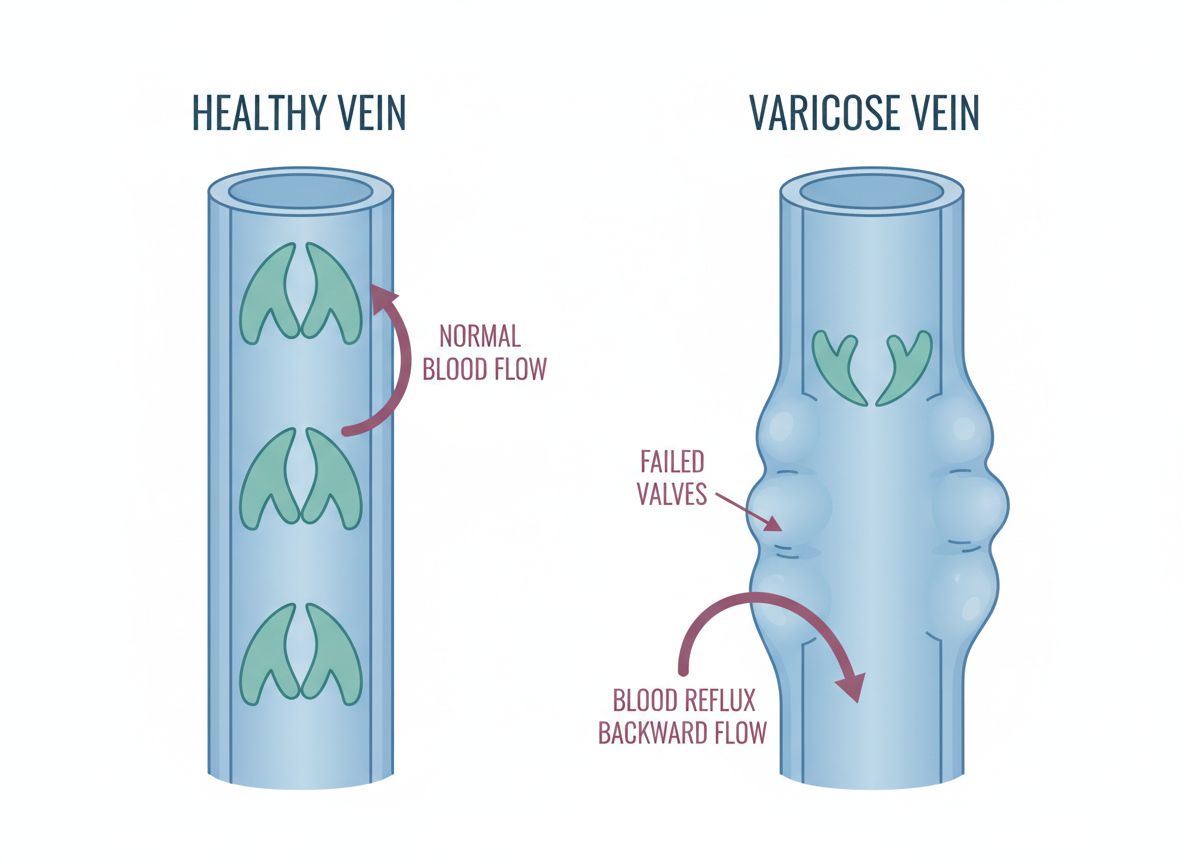
Varicose veins develop when the one-way valves inside the leg veins stop working properly. Blood leaks backwards (venous reflux), pressure builds up, and the vein stretches and becomes visible.
Common varicose vein symptoms
Symptoms often build gradually. Many people notice they're worse after prolonged standing or towards the end of the day.
- Aching, heaviness, or tired legs
- Swelling around the ankles
- Itching, burning, or irritated skin
- Night cramps
- Visible bulging veins that are getting larger over time
When should you seek treatment?
It's worth arranging an assessment if symptoms are persistent, affecting sleep, work, or daily comfort — or if you're noticing skin changes.
Seek advice sooner if you notice:
- Skin discolouration around the ankle (brown/red staining)
- Venous eczema (itchy, inflamed, flaky skin)
- A hard, tender vein (possible superficial thrombophlebitis)
- Bleeding from a varicose vein
- A slow-healing wound near the ankle (possible venous ulcer)
The role of duplex ultrasound
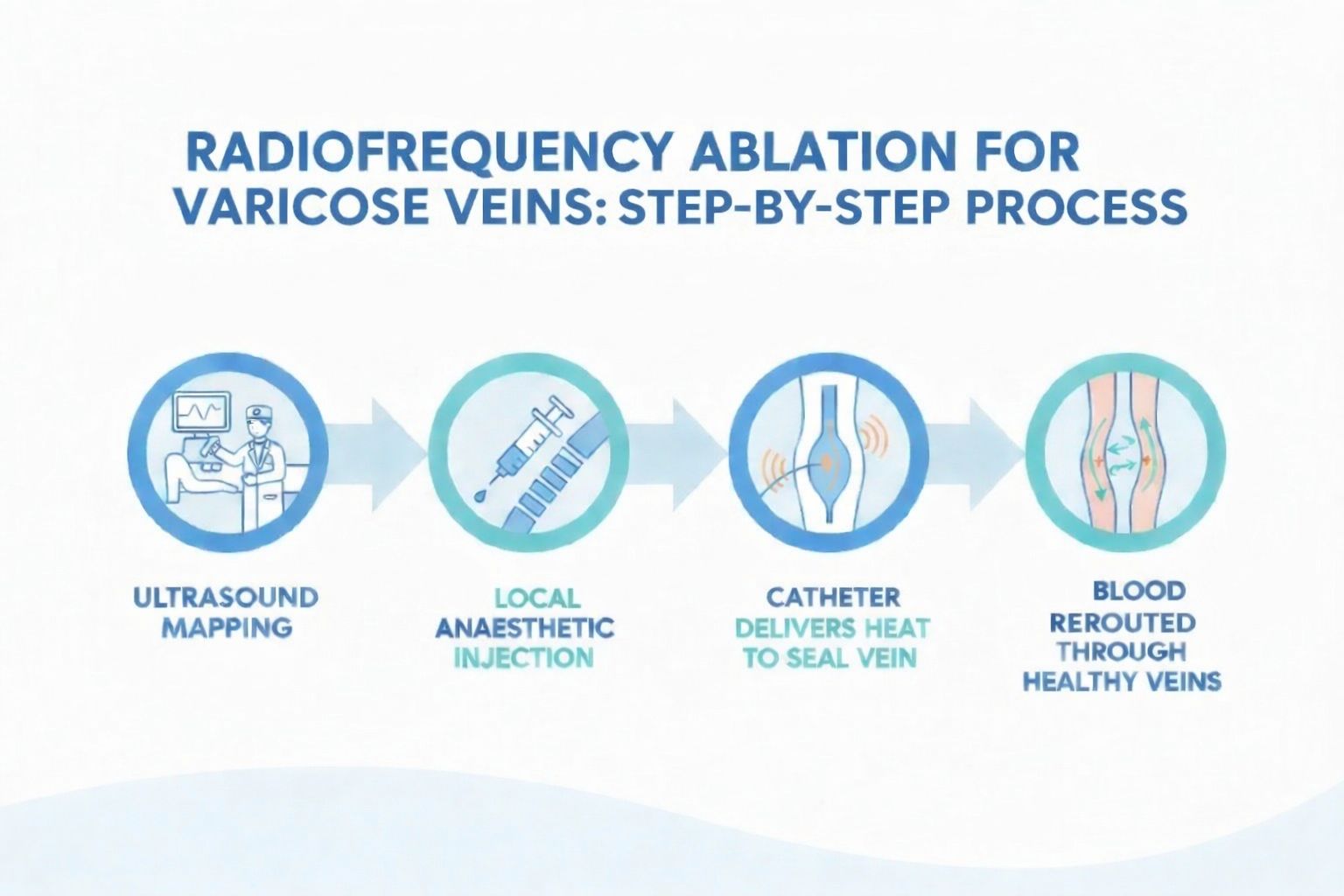
A duplex ultrasound scan is the key investigation for varicose veins. It maps the vein anatomy and blood flow, identifies where valves are failing, and guides a targeted treatment plan.
Your treatment options
Modern varicose vein treatments are minimally invasive and usually performed under local anaesthetic as day cases.
1) Radiofrequency ablation (RFA)
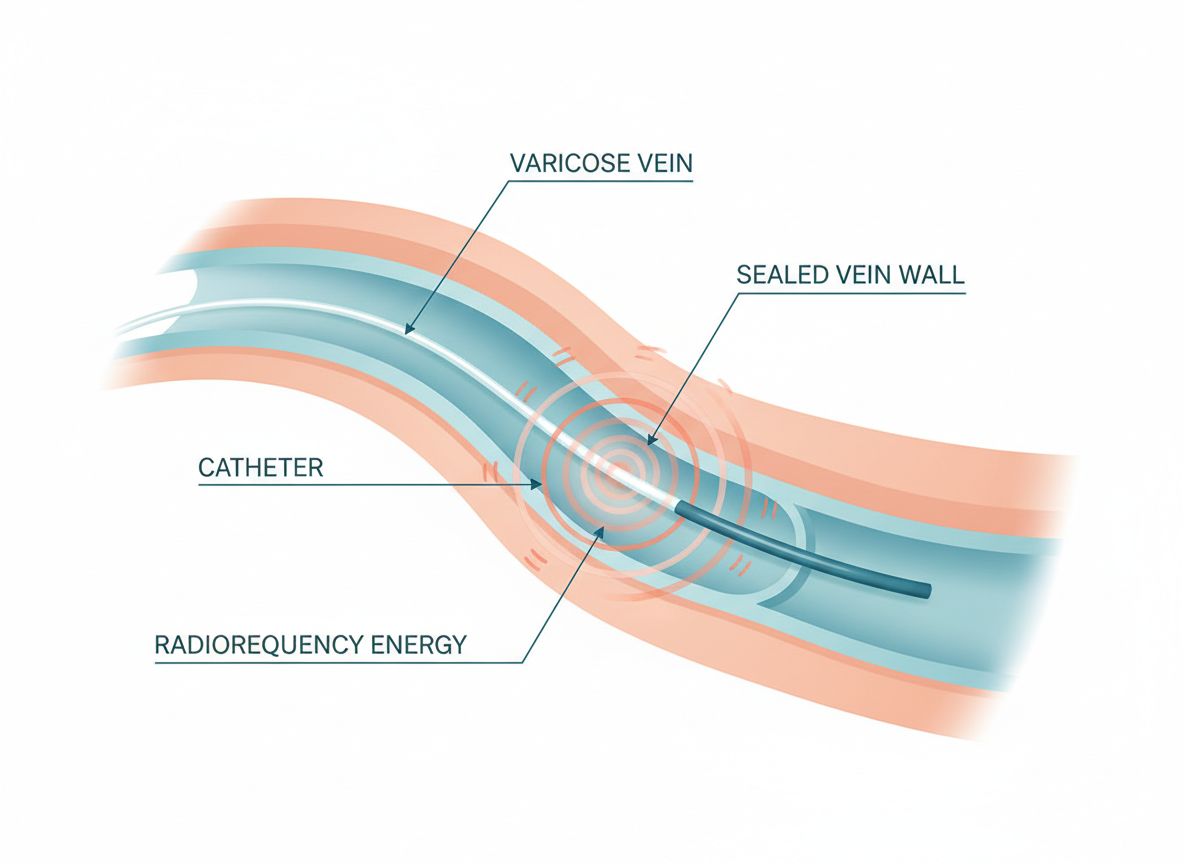
RFA uses controlled heat delivered via a thin catheter to seal the faulty vein from the inside. Blood is rerouted through healthy veins.
2) Foam sclerotherapy
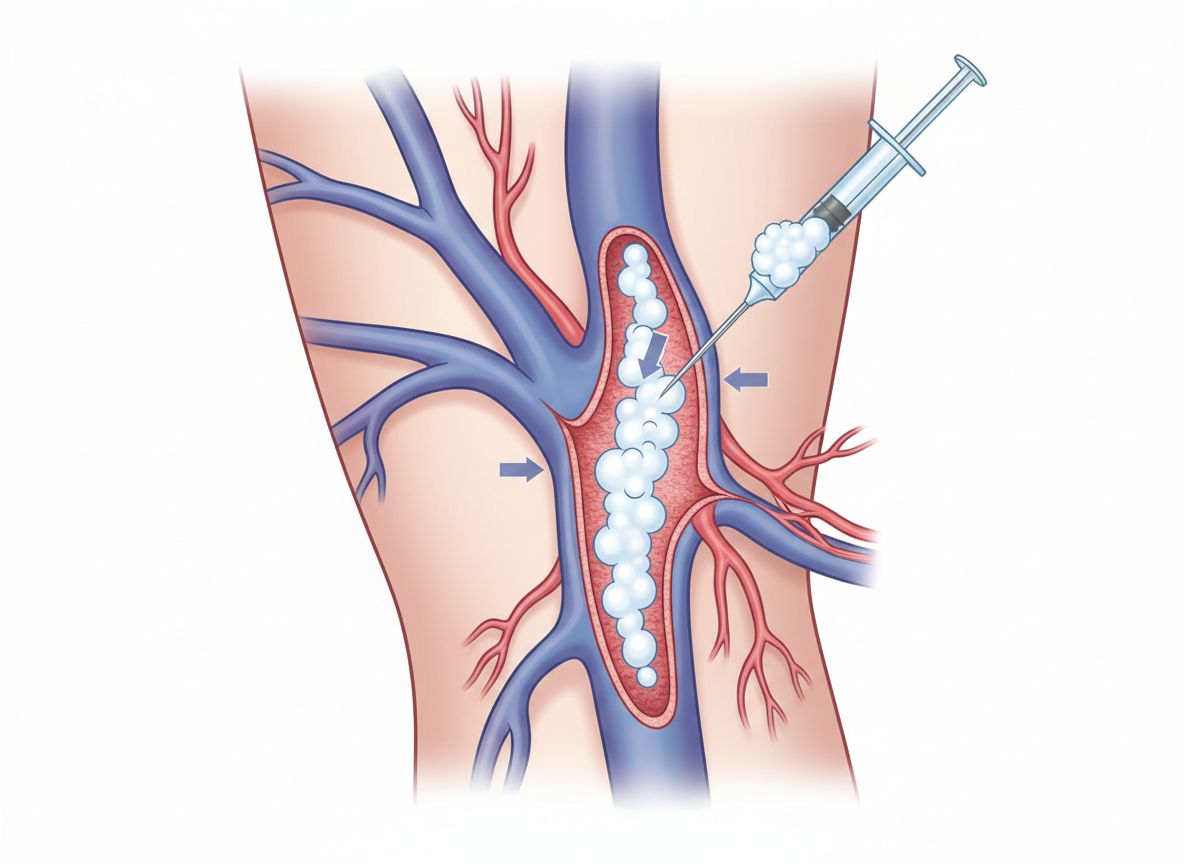
Foam sclerotherapy involves injecting a medical foam into the affected vein (often under ultrasound guidance). The foam causes the vein to close and be absorbed over time.
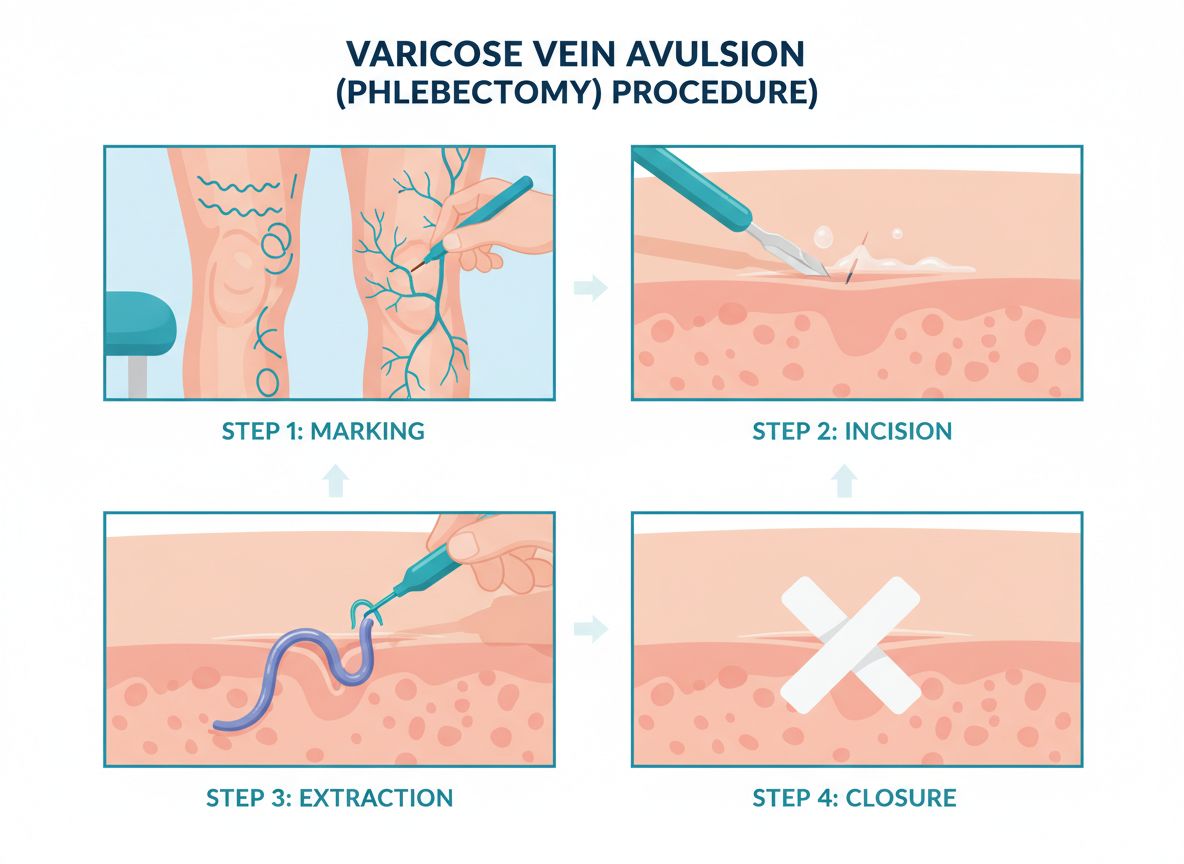
3) Avulsions (phlebectomy)
Avulsions remove visible surface varicose veins through tiny micro-incisions (usually 2–3 mm). They're often combined with RFA or foam to treat both the underlying reflux and the visible branches.
What results can you expect?
Most patients are back on their feet immediately after treatment. Discomfort usually settles within around two weeks, and many patients experience significant symptom improvement within weeks.
Book an assessment and duplex ultrasound
If you're experiencing varicose vein symptoms — or you're unsure what's causing your leg discomfort — a consultation with duplex ultrasound can give you clear answers and a personalised plan.
If you have urgent symptoms (e.g. sudden leg swelling or significant bleeding), please seek urgent NHS assessment via 111 or A&E.