This guide explains typical symptoms, when it's worth considering treatment, and what your options are — including microsclerotherapy. We'll also explain when a duplex ultrasound scan is helpful to check for deeper vein problems.
What are thread veins (spider veins)?
Thread veins are small, visible veins close to the surface of the skin. They often look like fine red, blue, or purple lines in a web-like pattern. They are different from varicose veins, which are larger, raised, and more likely to cause symptoms.
Common symptoms
Many people have no physical symptoms. When symptoms do occur, they're usually mild and can fluctuate.
- Cosmetic concern (appearance and confidence)
- Mild aching or heaviness, especially after prolonged standing
- Itching or burning in the area of the veins
- Leg fatigue towards the end of the day
When is it worth treating thread veins?
Treatment is usually considered for one of two reasons: you're bothered by the appearance, or you're experiencing discomfort that may be related to superficial venous pressure.
It's sensible to seek an assessment if:
- Your thread veins are spreading quickly or becoming more extensive
- You have persistent aching, heaviness, or swelling
- You also have visible varicose veins
- You've noticed skin changes around the ankle (discolouration, eczema, thickening)
- You've previously had a DVT or known venous disease
Do you need a duplex ultrasound scan?
Not always — but in many patients it's helpful. A duplex ultrasound scan maps the veins and blood flow and can identify whether deeper reflux (hidden varicose veins) is feeding the thread veins.
If there is significant underlying reflux, treating that first often improves the long-term result and reduces the chance of thread veins returning.
Your treatment options
1) Microsclerotherapy (gold standard for legs)
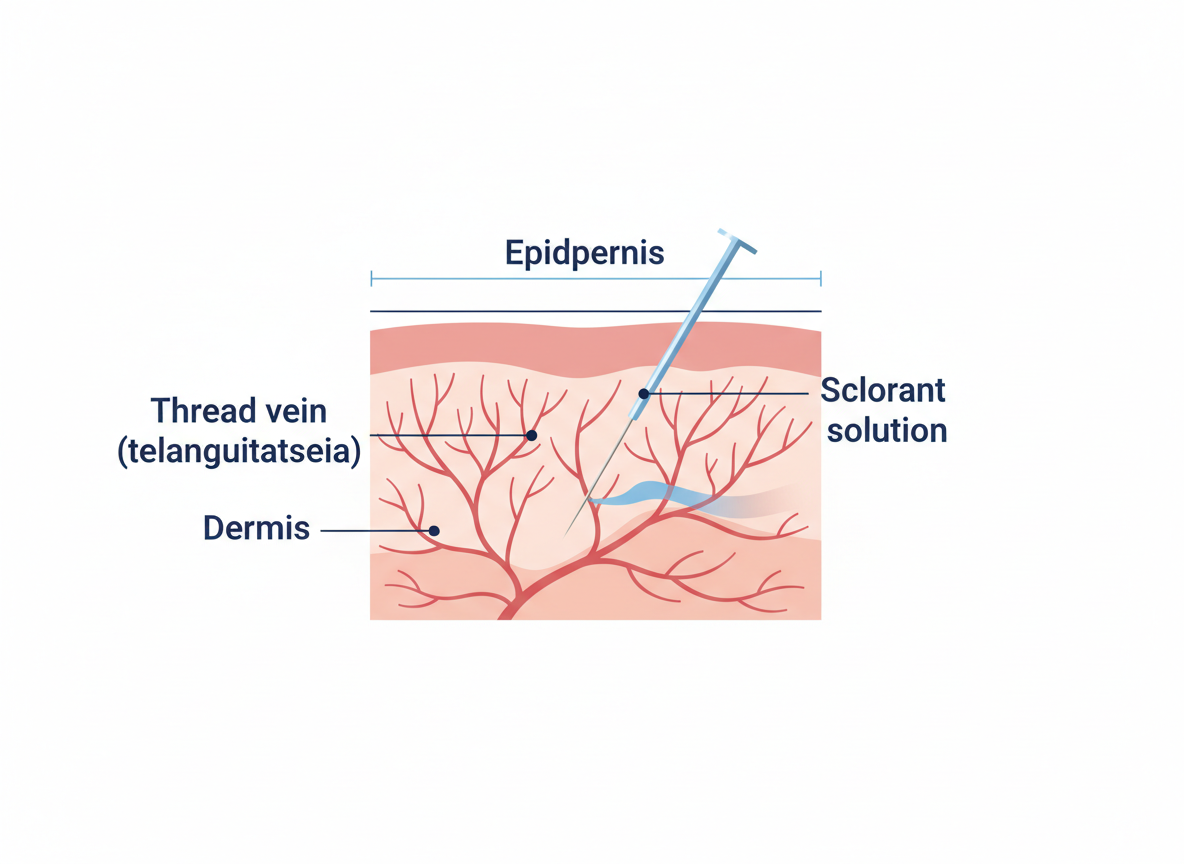
Microsclerotherapy treats thread veins by injecting a sclerosant solution into the vein using a very fine needle. The solution irritates the vein lining, causing it to collapse and seal shut. Over the following weeks, the body gradually absorbs the treated vein.
What to expect
- Sessions typically take 15–30 minutes
- Most patients need 2–4 sessions (spaced several weeks apart)
- Results develop gradually over 6–12 weeks
- Walking is encouraged straight away
2) Foam sclerotherapy (for feeder veins / slightly larger veins)
If there are slightly larger “feeder” veins (reticular veins) contributing to the thread veins, foam sclerotherapy may be used. Foam displaces blood more effectively and can create a stronger seal in selected veins.
3) Thermocoagulation (often used for facial thread veins)
Facial thread veins are commonly treated with thermocoagulation, which uses a fine insulated needle to deliver controlled radiofrequency energy to seal the vein.
Book an assessment (and duplex ultrasound if indicated)
If you're unsure whether your thread veins are purely superficial or could be linked to underlying venous reflux, a specialist assessment can give you clear answers and a personalised plan.
Ready to discuss treatment?
Request an appointment for assessment. If a duplex ultrasound scan is indicated, it can be arranged to guide the safest, most effective plan.
If you have urgent symptoms (e.g. sudden leg swelling or significant bleeding), please seek urgent NHS assessment via 111 or A&E.